Friday, April 10, 2009

The nature of love

Today, my church conducted a poignant and deeply contemporary Good Friday service. It was the kind of hip, emotional programme that really affected me as a teenager - complete with moody lighting, heartfelt music, and dramatic art. It was incredibly well done. Interspersed between each section were short, pointed messages by each of my church's English pastors.

JOHN 3:16 (KJV)

16For God so loved the world, that he gave his only begotten Son, that whosoever believeth in him should not perish, but have everlasting life.

The service provided plenty of time for prayer and reflection, and sharply reminded me of God's love for us. In the final moments, our head pastor imparted four key responses: Accept God's love. Guard that love. Feed off of that love. Share that love.

This simple message struck a powerful chord with me. As school and life have swirled around me, I have predominantly allowed my walk of faith to coast upon that which I had already established. No longer did I have time for quiet times and scripture readings. I believe in God, and I accept his love, but I simply didn't have time to grow.

God's love is immense, so much so that he took on flesh and died for the forgiveness of our sins in accordance with scripture. How should we respond to this love? We should return it. Reciprocate it. Our love, like God's love, should be an active love - a growing love.

I need to return to a life of devotion and faithfulness, to rekindle the light of joy and love in my own heart. If you happen to find yourself in my shoes today, I hope you will too.

...

Postscript: I recognize too that after walking out of an emotionally charged event or service, it is easy for each of us to have an emotional response. The challenge for us then is to examine that response, and if it is valid, to translate it to more than just a tugging on our emotional heartstrings but a commitment by our soul.

Wednesday, April 1, 2009

God of our understanding

As part of my community health course at school, I've been spending quite a bit of time attending sessions at or related to Alcoholics Anonymous. AA is a pretty unique program geared toward helping alcoholics overcome their addiction. It's laid out as a twelve-step process, supported by other alcoholics. Abstinence to AA is a lifelong and life-changing road. Recipients of the fruits of the program in turn give back what they have gained through sponsorship of other alcoholics, their time, and their commitment.

To AA, recovery is a spiritual process requiring a "psychic change" or radical shift in the way an alcoholic perceives the world (a Christian might call their initial state a "hardened heart"). It requires that they accept that they alone are not in control of their addiction and require a power outside themselves. The often controversial third step of the twelve step program is as follows...

[We made] a decision to turn our will and our lives over to the care of God as we understood him.

The words "as we understood him" are key to modern AA practice. While AA claims to be a spiritual organization, it does not purport to be a religious one. Today, the "God of our understanding" signifies a power beyond ourselves. Some people understand this to be the God of a particular religion, others a general energy force guiding the universe, and still others attribute this to be the power of the group itself.

This raises a number of interesting issues. Firstly, despite its non-religious underpinnings, AA feels familiarly church-like. Meetings generally begin with a prayer (the Serenity Prayer) and key doctrinal readings to AA (the Twelve Traditions and Twelve Steps). These are followed by announcements and then by a speaker. The meeting welcomes newcomers and then closes with a prayer (often the Lord's Prayer).

THE SERENITY PRAYER

God grant me the serenity
to accept the things I cannot change;
courage to change the things I can;
and wisdom to know the difference.

Despite the recognizable structure (akin to opening prayer, scripture reading, announcements, sermon, welcome and introductions, and closing prayer) and even the recital of Jesus' own prayer, AA is a non-religious entity and will remain so.

Speaking to a fellow believer about the church-like feel of AA meetings, they commented, "It feels kind of incomplete to be approaching so close to the truth, yet to shy away from it."

I understood the sentiment. Alcoholics Anonymous had formed under the auspices of the Christian faith, recognizing the effectiveness of that faith yet with the laser-like focus of attacking alcoholism. But the purpose of AA is to treat alcoholism, not to proselytize for Christ or any particular religion. If faith in one particular God is a barrier to helping others overcome alcoholism, then it cannot be integral to AA. It is our job as the church to spread the good news of Christ.

MATTHEW 28 (NLT)

19 Therefore, go and make disciples of all the nations, baptizing them in the name of the Father and the Son and the Holy Spirit.

An interesting dialogue arose during the sharing of an alcoholic at one of the AA sessions I attended. The alcoholic in question was of the impression that God did indeed exist, and he made the following statement:

Religion is man-made.
Spirituality is God-given.

I found this to be an understandable statement, though I disagreed with it. Religion as an institution is man-made, yet the foundation of religion are claims of truth brought to man through revelation. If spirituality is God-given, that is if God exists to share of himself and his nature with us, then it makes sense that God would reveal to us things spiritual. That is what religion is: knowledge about God, and life, and goodness revealed to man through a spiritual interaction with God himself.

JOHN 16 (ESV)

12 "I still have many things to say to you, but you cannot bear them now. 13 When the Spirit of truth comes, he will guide you into all the truth, for he will not speak on his own authority, but whatever he hears he will speak, and he will declare to you the things that are to come. 14 He will glorify me, for he will take what is mine and declare it to you. 15 All that the Father has is mine; therefore I said that he will take what is mine and declare it to you.

Perplexing, though, was that the same man then followed up with this anecdote:

One day we were going over the third step, and my sponsor said, "Oh, you think I'm going to give my life over to just any God? No, I don't think so. I'm going to write the job description for God. And my God is going to be better than any of your gods. He's going to be omnipotent, omniscient, he's going to have a sense of humour..."

And I thought to myself, that's a great idea. So I took that God as my God. Then I added the most important characteristic of my God: That he loves me and wants nothing bad for me.

Two reactions hit me at the same time. Firstly, this description of the ideal God fit the God of Christianity to a tee. He is omnipotent, omniscient, creative... and he is love!

1 JOHN 4 (NLT)

7
Dear friends, let us continue to love one another, for love comes from God. Anyone who loves is a child of God and knows God. 8 But anyone who does not love does not know God, for God is love.

Secondly, by setting out the job description for God, you are setting limits on a being that you already believe exists. That is man-made. If God exists and is empowering you, then imagining your own set of characters for God to possess if futile. God is who God is. I am reminded of the song Who? by the Newsboys:

How we gonna work this out?
To fabricate a God like this no doubt
We'd end up worshipping a Christ of our own design
But Jesus doesn't fit that profile
His ways aren't mine

I'm not following a God that's imagined
Can't invent This deity
That's why Jesus is the final answer
To who I want my God to be
He's who I want my God to be


Get your own playlist at snapdrive.net!

God is beyond our understanding or our imagination. Were it not so, how could he be God?

EPHESIANS 3 (NLT)

20 Now all glory to God, who is able, through his mighty power at work within us, to accomplish infinitely more than we might ask or think. 21 Glory to him in the church and in Christ Jesus through all generations forever and ever! Amen.

I'd like to share one last anecdote. When asked what kind of experiences led him to believe in God, the speaker shared a story of how he had been drunkenly driving one night, speeding toward a motel to get laid. Losing control of the car, he swerved into the opposing lane. If there had been any traffic in the other lane he would have been dead on impact, but luckily he had caught the opposing lane on a red light. This was not the only instance where such an incident occurred. He expressed an inability to explain these blessings without a greater power looking after him.

During the break, when the speaker had exited the room, two of my colleagues began discussing the experience. One began:

Red light? He had a 50/50 chance. What about that 50% that didn't survive to tell the story. God? Come on!

I found this attitude somewhat disconcerting. Sure, there were certain odds at work. (The fact that this had occurred on more than one occasion probably means the he beat the odds by quite a bit!) Certainly, survival does not and cannot prove the hand of God. True, people die everyday. But what this man believed - that he had survived by the grace of God and that he had been in that positive 50% because of the hand of God - true or not, is not ridiculous. It is not impossible. It is not absurd.

ROMANS 8

28And we know that for those who love God all things work together for good, for those who are called according to his purpose.

God exists. He is unchanging and beyond our capacity for invention. He calls to you and to I. He loves us, and desires to do good to us and through us.

Wednesday, March 11, 2009

Good without God

On my way home the other day, I happened by an advertisement by Humanist Canada, it read:

You can be good without God.

It was an interesting statement, seemingly meant to espouse the atheist philosophy, much like the controversial "There's probably no God" advertisements. I can only imagine that such advertisements seek to negate the need for God because, well, an atheist can be just as good as a Christian can. Where then does God factor into that?

And it's true, an atheist can be as "good" as a Christian can. So can a Hindu, a Buddhist, a Muslim, a Shintoist, and a Jew. Most major religions lay claim to moral codes, and these moral codes usually hold similar values at heart - for instance, the condemnation of murder. An atheist who upholds a similar moral code and works fervently to act upon it, can be just as "good" as any religious individual. They can aspire to be loving, kind, and forgiving. They may make donations to the poor, solve conflicts with patience, and treat others as they would be treated.

Yet even so, even the best of us are partial to anger, selfishness, pride, lust... In other words, even though we try to be "good", we're never perfect.

ROMANS 3 (NLT)

23 For everyone has sinned; we all fall short of God’s glorious standard.

But in focusing on the pursuit of righteousness, one is missing the point. Faith in God is not about being good, but about seeking truth. Indeed, a desire to improve ourselves may come about as a byproduct of our faith, but that faith is rooted in something deeper. Christians do not believe in God because they think it will make them a better person (though it may, in the process, do so) but because they believe that God exists, that he is real, and that the Bible is true.

Their own attempts to be good or inadequacy at achieving better results than their atheist neighbour does not make God less relevant. In fact, it makes God more relevant. Because in acknowledgement that we cannot achieve "goodness" beyond that which any other man can achieve (which is not all that "good" at all) on our own, we recognize our own weakness and need for salvation. Christianity offers this salvation in the form of Christ Jesus, who sacrificed his life that we might be reconciled with God. He claims more than just a path to "goodness" but a way back to God, life eternal, and truth.

GALATIANS 3 (NLT)

3 How foolish can you be? After starting your Christian lives in the Spirit, why are you now trying to become perfect by your own human effort?

JOHN 14 (ESV)

6Jesus said to him, "I am the way, and the truth, and the life. No one comes to the Father except through me.

Indeed, Romans 3, which I cited above, continues:

ROMANS 3 (NLT)

23 For everyone has sinned; we all fall short of God’s glorious standard. 24 Yet God, with undeserved kindness, declares that we are righteous. He did this through Christ Jesus when he freed us from the penalty for our sins. 25 For God presented Jesus as the sacrifice for sin. People are made right with God when they believe that Jesus sacrificed his life, shedding his blood. This sacrifice shows that God was being fair when he held back and did not punish those who sinned in times past, 26 for he was looking ahead and including them in what he would do in this present time. God did this to demonstrate his righteousness, for he himself is fair and just, and he declares sinners to be right in his sight when they believe in Jesus.

I'm reminded of a song I first heard many years ago (Never Gonna Be as Big as Jesus by Audio Adrenaline), which went on to say:

I could be about as good
Good as any human could
But that won't get me by


Get your own playlist at snapdrive.net!

"You can be good without God." Is this true? To a certain perspective it is. By our own efforts, we can be no better than any other human being. But we trust in God because we believe his message to be true, and our faith then leads us toward salvation and transformation through Christ Jesus our saviour. It is He who makes us truly "good", but more importantly sets our sights beyond this life and toward eternity.

EPHESIANS 3 (NLT)

20 Now all glory to God, who is able, through his mighty power at work within us, to accomplish infinitely more than we might ask or think. 21 Glory to him in the church and in Christ Jesus through all generations forever and ever! Amen.

Sunday, March 8, 2009

The fall of orthodoxy

In Quebec, as throughout Europe, churches are falling silent - relics of a more pious time. Few sermons are given from these pulpits, few prayers offered from these pews.

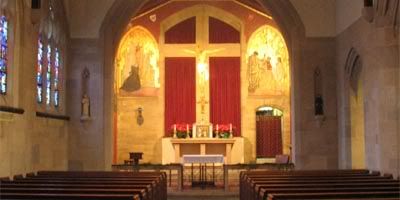
It might be quite beautiful, with its golden cross next to the steeple, its triumphal arches inside, its extraordinary Casavant organ presiding, but that hasn't stopped Notre-Dame-du-Perpétuel-Secours from steadily becoming abandoned. Barely 100 seats in its pews built for 1,000 are taken on Sundays, and that's on a good day.

...

The fire sale of Catholic churches in Quebec continues unabated; they are victims of a population that, more than elsewhere in Canada, has turned its back on organized religion.

[source]

Quebec has changed, Europe has changed, and the church has not kept pace. I recall a story, told by a minister at my own church, whereby he took his family on a vacation to Europe. On Sunday, they went to a beautiful, traditional church only to find nobody there - no pastor, no worshippers, nothing but empty halls. Dejected, he stepped up to the podium and preached to his own family. After all, God belonged there in that house.

What do I mean that the church has not kept pace? What I do not mean is that the church ought to bend its moral backbone to the liking of society. The gospel message of salvation, the Christian journey toward becoming more like God, and the attitude of giving glory to the Lord are not flexible. What I am referring to is tradition and ceremony.

Traditional churches are quiet and respectful places of worship. They hold fast to set and proper ways - choral music, stained glass windows, fancy priesthood. This is not bad nor wrong. Many people enjoy these things, and where there is a heart to participate in such worship, such worship is appropriate. Each individual has different needs, and if a traditional church can meet these needs - if a traditional church has a thriving congregation - then God is being glorified in that place.

Yet in many places, the fabric of society has fallen away from God. It is the role of the church to engage the people. We should not forget that though we perceive older churches with their grand and Gothic architecture as "traditional", at one time these churches were very much in tune with society. Artists such as Bach and Handel found great inspiration through these institutions of faith.

Today, classical music is not the music of the times. Suits and dresses are not the fashion of the day. If a change in style is what is needed to draw people back into churches, then perhaps the church needs to transform itself. It is the sharing of the gospel message that is of utmost import.

1 CORINTHIANS 9 (ESV)

19For though I am free from all, I have made myself a servant to all, that I might win more of them. 20To the Jews I became as a Jew, in order to win Jews. To those under the law I became as one under the law (though not being myself under the law) that I might win those under the law. 21To those outside the law I became as one outside the law (not being outside the law of God but under the law of Christ) that I might win those outside the law. 22To the weak I became weak, that I might win the weak. I have become all things to all people, that by all means I might save some. 23I do it all for the sake of the gospel, that I may share with them in its blessings.

For many of the older generation, it seems unconscionable to turn the dignified tradition of the church into a place of rock music, clapping, and dancing. While such people are entitled to worship the Lord in their own way, let us remember that it is not the form of worship that is of consequence, but the heart of worship. God never demanded that worship to be him be solemn and serious.

1 SAMUEL 10 (NIV)

5 "After that you will go to Gibeah of God, where there is a Philistine outpost. As you approach the town, you will meet a procession of prophets coming down from the high place with lyres, tambourines, flutes and harps being played before them, and they will be prophesying. 6 The Spirit of the LORD will come upon you in power, and you will prophesy with them; and you will be changed into a different person.

2 SAMUEL 6 (NIV)

14 David, wearing a linen ephod, danced before the LORD with all his might, 15 while he and the entire house of Israel brought up the ark of the LORD with shouts and the sound of trumpets.

16 As the ark of the LORD was entering the City of David, Michal daughter of Saul watched from a window. And when she saw King David leaping and dancing before the LORD, she despised him in her heart.

20 When David returned home to bless his household, Michal daughter of Saul came out to meet him and said, "How the king of Israel has distinguished himself today, disrobing in the sight of the slave girls of his servants as any vulgar fellow would!"

21 David said to Michal, "It was before the LORD, who chose me rather than your father or anyone from his house when he appointed me ruler over the LORD's people Israel—I will celebrate before the LORD. 22 I will become even more undignified than this, and I will be humiliated in my own eyes. But by these slave girls you spoke of, I will be held in honor."

It is indeed distressing to see the House of the Lord vacant. The church must do what it can to engage today's people, to spread the gospel message of God's love and galvanize the people back into a personal relationship with Him - even if it means becoming more undignified than this.

Monday, February 9, 2009

Taking the "Christ" out of Christian

A new battlefront is opening up in this war of ideals. As the Freethought Association of Canada prepares to run anti-God public advertisements declaring, "There's probably no God. Now stop worrying and enjoy your life," the United Church of Canada is gearing up for a counter-punch with advertisements stating, "There probably is a God. Now stop worrying and enjoy your life."

Amidst this mincing of words, Right Reverend David Giuliano made what would seem to be a rather obvious statement: "Clearly, as Christians, we most definitely believe there is a God."

Yet, appearing in the Toronto Star, came the most counter-intuitive of rebuttals:

Most of the people in the congregation I serve, West Hill United Church, will think Giuliano is probably mistaken. And most of us still call ourselves Christian. We do so because we believe the message that is the essence of the Christian story. Perhaps it's our penchant for pointing to this that allows us to remain productively within our denomination. (A poll on the UCC's website indicated Saturday that 69 per cent believe there is no God, triggering the church's leadership to send out an email with the subject line: "God needs your help," and urging members to vote in the poll and boost God's ratings.)

And yet, how can you have Christianity without God and Christ, the very cornerstones from which the word "Christian" derives its meaning and purpose? I have no qualms with non-believers attending church, and in fact am encouraged when churches demonstrate the ability to engage their community. But let us speak plain: a "Christian" who espouses the "essence of the Christian story" but rejects God is no Christian at all. Rather they are an atheist or agnostic who believes in Christian values and morality.

This difference is incredibly relevant. Anybody can strive to be moral or ethical. Christians do not have a monopoly on the desire to do good. Rather, Christianity asserts that it possesses knowledge of an important truth - the truth of salvation. Christians aspire to be moral beings in reverence of Christ, who through his sacrifice has already saved them. Morality, fellowship, and evangelism are the results of our faith, not the basis of it.

GALATIANS 1 (ESV)

6I am astonished that you are so quickly deserting him who called you in the grace of Christ and are turning to a different gospel— 7not that there is another one, but there are some who trouble you and want to distort the gospel of Christ. 8But even if we or an angel from heaven should preach to you a gospel contrary to the one we preached to you, let him be accursed. 9As we have said before, so now I say again: If anyone is preaching to you a gospel contrary to the one you received, let him be accursed.

1 CORINTHIANS 15 (ESV)

1Now I would remind you, brothers, of the gospel I preached to you, which you received, in which you stand, 2and by which you are being saved, if you hold fast to the word I preached to you— unless you believed in vain. 3For I delivered to you as of first importance what I also received: that Christ died for our sins in accordance with the Scriptures, 4that he was buried, that he was raised on the third day in accordance with the Scriptures

To speak as "Christians" without faith in Christ is to speak deceit. Why is this important? I have previously expressed the view that antagonizing the homosexual community over the word "marriage" is ungracious because the word means different things to Christians and non-Christians. Why should the word "Christian" itself be any different?

But while marriage is judged differently by religious and non-religious persons, society as a whole judges Christians by those who identify themselves as being so. That 69% of those polled by the United Church of Canada identify themselves as "Christians" who don't believe in God reflects then upon the Christian community as a whole, yet it is no more valid than a circle espousing the "essence of being a shape" and calling itself a square. It can be a shape without being a square, but it's not a square because it doesn't have four sides.

You can believe in Christian institutions, but that doesn't make you a Christian if you don't have Christ - and you can't have Christ if you reject God.

JOHN 14 (ESV)

10Do you not believe that I am in the Father and the Father is in me? The words that I say to you I do not speak on my own authority, but the Father who dwells in me does his works. 11Believe me that I am in the Father and the Father is in me, or else believe on account of the works themselves.

The church's response (petitioning believers to vote "yes" to God and outweigh the naysayers) is merely an attempt to disguise the problem. It does not address the problem itself - that many in the United Church congregation identify themselves as atheist "Christians," and while I am hesitant the point fingers, this may underlie some fundamental lapses in sound teaching.

People may believe what they believe - it is their right to do so - but they ought not to misrepresent themselves, and consequently the church and the Christian faith.

---------------------------------------------

Another recent opinion piece was written by Michael Shermer, a Christian-turned-agnostic who now advocates the "humanist" philosophy. He designed a study which asked Christians why they believed in God and also why they thought that others believed in God.

From his results, he drew the following conclusions:

Notice that the intellectually based reasons offered for belief in God – "the good design of the universe" and "the experience of God in everyday life" – which occupied first and second place when people were describing their own beliefs dropped to sixth and third place, respectively, when they were describing the beliefs of others. Indeed, when reflecting on others' beliefs, the two most common reasons cited were emotion-based (and fear-averse!): personal comfort ("comforting, relieving, consoling") and social comfort ("raised to believe").

Sulloway and I believe that these results are evidence of an intellectual attribution bias, in which people consider their own beliefs as being rationally motivated, whereas they see the beliefs of others as being emotionally driven. By analogy, one's commitment to a political belief is generally attributed to a rational decision ("I am for gun control because statistics show that crime decreases when gun ownership decreases"), whereas another person's opinion on the same subject is attributed to need or emotional reasons ("he is for gun control because he is a bleeding-heart liberal"). This intellectual attribution bias appears to be equal opportunity on the subject of God. The apparent good design of the universe, and the perceived action of a higher intelligence in daily activities, are powerful intellectual justifications for belief. But we readily attribute other people's belief in God to their emotional needs and how they were raised.

At first glance, this seems a rather unsettling outcome: We believe that the faith of others is based on emotion, but blindly cling to the conception that our own faith is intellectual and rational. I myself, briefly considered this argument.

I do believe that my faith is rational, having spent several years struggling with my own doubts and coming to my own conclusions about my faith. However, the final leap to believe or not believe is just that - faith. I also believe that there are many believers of many faiths who have only a loose understanding of their own faith and have not made much effort to reason through it.

However, in addition to prayer, scripture, and experience, the rational and intellectual arguments that have impacted me have often come from other people - people who I could recognize as spiritually mature, intelligent, and from whom I had much to learn. That is, I don't believe that I am alone in having a rational and intellectual faith. It's not merely a deluded self-justification. There will always be those who are not looking for the truth, or who use the guise of faith to their own ends; but a recognition of this does not invalidate the vibrant, intelligent community of believers that does exist.

Read cited articles at TheStar.com: [1 | 2]